Metallurgy

Powder Metallurgy Course in Hyderabad – Complete Guide

Learn Powder Metallurgy Course in Hyderabad with simple explanations, step-by-step processes, powder production methods, compaction, sintering, and industry applications

Introduction :

Looking for the best Powder Metallurgy Course in Hyderabad? This training program offers students and beginners a simplified, hands-on path to mastering the entire PM lifecycle: from producing fine metal powders to compacting and finally sintering them into high-performance engineering parts. It’s a foundational skill for materials science and mechanical engineers.This subject is an important part of metallurgy and materials engineering, especially for learners who want strong fundamentals without complexity.Course Overview .

This Powder Metallurgy Course in Hyderabad covers powder production, compaction, sintering and industrial applications.

This course gives you a clear understanding of how metal powders are created, shaped, compacted, and sintered to form high-strength components. You will learn each stage of the Powder Metallurgy process, real-time case studies, standards used in manufacturing, and how industries apply these techniques to produce precision parts.

What You Will Learn :

  • Basics of metal powders and their properties

  • Production methods of metal powders

  • Flow, density, and particle size testing

  • Compaction methods. Sintering principles and furnace operations

  • Step-by-step breakdown of the Powder Metallurgy process.

Why Choose This Course?

  • Simple learning approach suitable for students and professionals.

  • Covers essential theory and industrial processes.

  • Helps you understand every stage of the Powder Metallurgy process with clarity.

  • This Powder Metallurgy Course in Hyderabad also prepares learners for technical discussions, interviews, and industrial expectations.

Who Can Enroll? 

  • Engineering students, Mechanical, manufacturing, and materials professionals.
  • Job seekers in automotive, aerospace, and tooling sectors.
  • Anyone interested in metal processing technologies

  • metallurgy-and-materials-engineering-hyderabad

Process :

1. What is Powder Metallurgy?

Powder Metallurgy (PM) is a manufacturing process in which metal or alloy powders are compacted (pressed) and then heated (sintered) to just below their melting point to form solid components. 
This technique is especially useful when you need complex shapes, tight tolerances, minimal waste, or when traditional melting and casting may be inefficient 

2. History & Evolution

  • While the core idea of powder-based component manufacturing is decades old, Powder Metallurgy has seen massive technological growth. We’ve evolved beyond simple ‘press & sinter’ techniques to include complex, advanced methods like Hot Isostatic Pressing (HIP) and Metal Injection Moulding (MIM). Today, it’s recognized as an efficient, green manufacturing choice


🧩 Step 1: Powder Production :

This is the first and most important step — producing fine metal powders from solid metal.
Different methods are used depending on the type of metal needed.

🔸 1A. Mechanical Method :

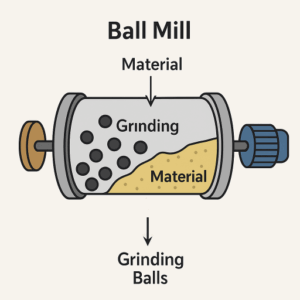
Metals are broken down into fine particles using crushing, milling, or grinding machines.
👉 Used for brittle metals like iron or copper.

🔸 1B. Atomization Method

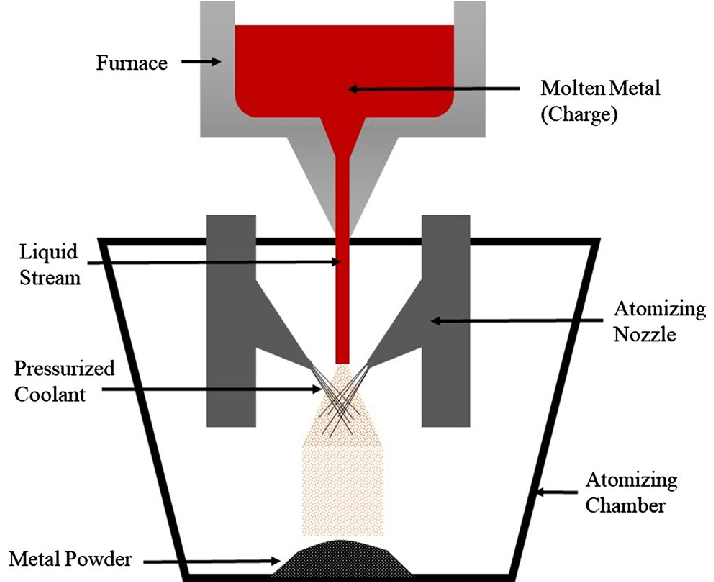
Here, molten metal is sprayed with gas or water jets, breaking it into tiny droplets that cool into powder.
👉 Most commonly used method for steel and copper powders.

🔸 1C. Electrolytic Method

As shown in your image —
Electric current passes through a metal salt solution; metal ions deposit as powder on the cathode.
👉 Produces pure, fine metal powders (Copper, Iron, Nickel).

🔸 1D. Chemical Reduction Method

Metal oxides are reduced to metal powders using a reducing gas like hydrogen or carbon monoxide.
👉 Used for iron, tungsten, and molybdenum powders.

image

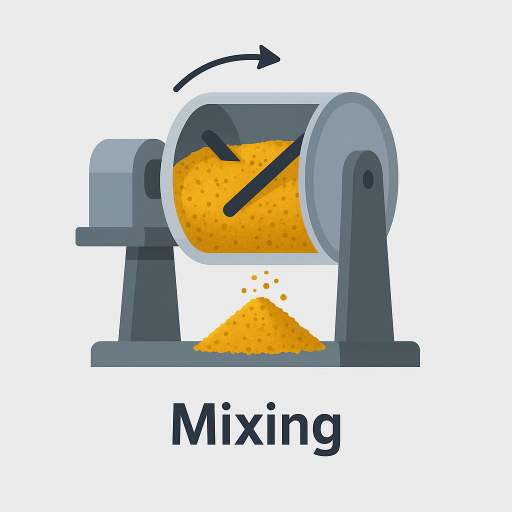
Step 2: Mixing and Blending :

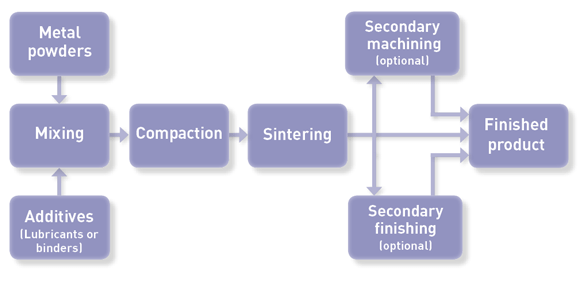
🧩 Powder mixing drum or Blender showing uniform mixture. Step 2: After the powders are prepared, they are mixed with lubricants and binders to ensure even distribution and easy pressing. This helps achieve uniform strength and shape. 👉 Example: Iron + Graphite + Wax → blended for strength and lubrication.
image

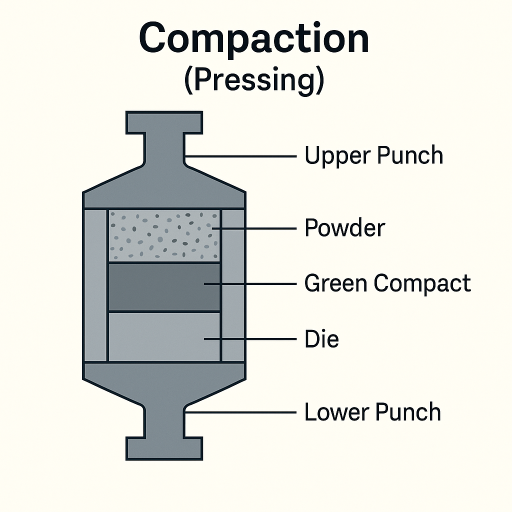
🧩 Step 3: Compaction (Pressing)

The blended powder is placed in a die (mold) and pressed under high pressure to form the desired shape. This forms a “green compact” — the part’s shape before heating. 👉 Example: Compacting copper powder into gear or bearing shape.
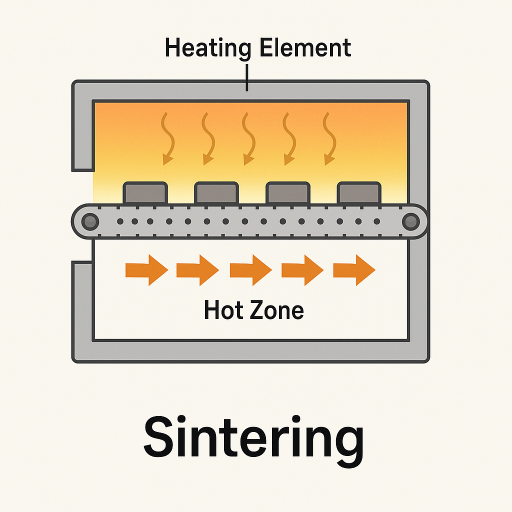
🧩 Step 4: Sintering

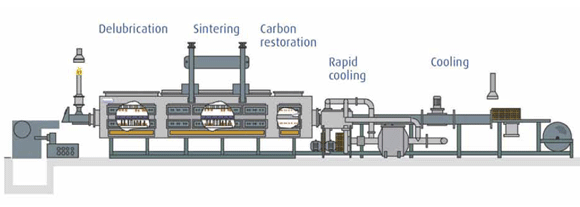
The green compact is heated in a furnace at a temperature just below the metal’s melting point. This causes particles to bond together, giving strength and durability. 👉 Example: Iron compact sintered at 1100–1200°C to make strong components.
image

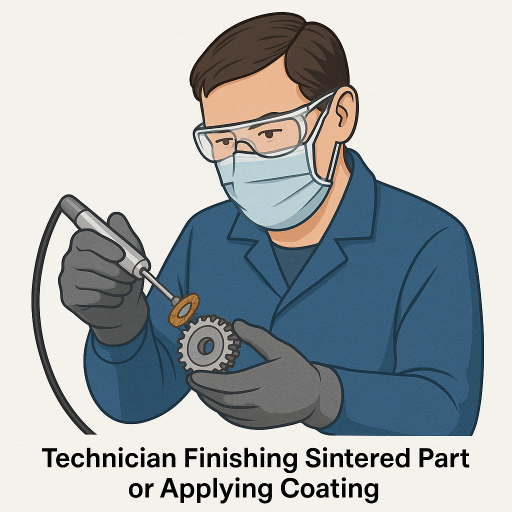
Step 5: Finishing or Secondary Operations

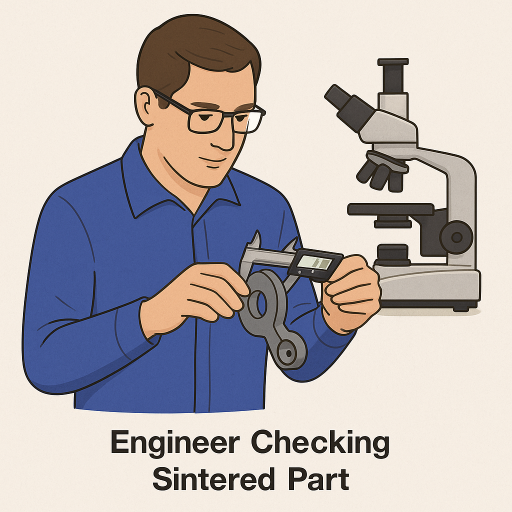
After sintering, some parts may need further improvement in accuracy or appearance. 🔸 Common Finishing Operations: Sizing: To correct dimensions Machining: For holes, threads, or smooth surfaces Infiltration / Impregnation: To fill pores with metal or oil Heat Treatment / Plating: To increase hardness or corrosion resistance
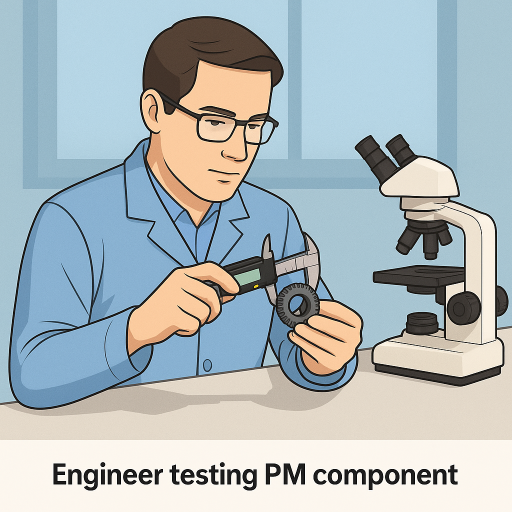
Step 6: Inspection and Quality Control

Before delivery, all parts are tested and inspected to ensure they meet the required standards. 🔍 Tests Include: Density Test: To measure compactness. Hardness Test: To ensure strength. Dimensional Accuracy: To verify size and shape. Microstructure Analysis: To check internal bonding.
image

🔹 Step 7: Final Product

The final step gives the ready-to-use product — strong, precise, and reliable. These components are widely used in automobiles, aerospace, tools, and electrical industries. ⚙️ Examples of Powder Metallurgy Products: Gears, bearings, and bushings Filters and magnetic components Medical implants and surgical tools
Powder Metallurgy Course in Hyderabad

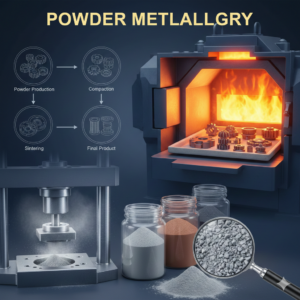
Powder Metallurgy Complete Process

Atomization Process ​

Powder Metallurgy Course in Hyderabad

Powder Metallurgy Continuous Furnace