"Foundry Technology – Complete Guide"
Foundry is where metal meets creativity. It’s the process of melting and shaping metals into useful parts — from car engines to art sculptures. In this course, you’ll learn how heat, design, and science work together to create strong and beautiful metal products. If you love practical work and want to build the future with your hands, Foundry Engineering is a great choice!
 What is Foundry Technology?
Foundry Technology is the process of making metal castings by pouring molten metal into a mold, allowing it to cool and solidify, and then removing the casting from the mold.
This method is widely used to produce complex shapes that are difficult or expensive to manufacture by other methods.
 Simple Line: “Foundry is the art of melting metal and shaping it in molds.”
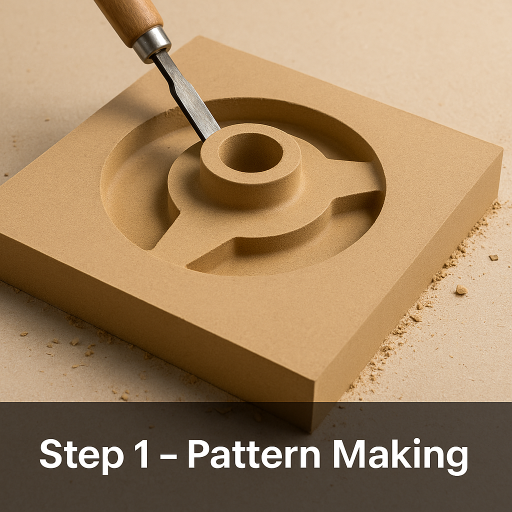
 Step 1: Pattern Making
A pattern is the replica of the final casting used to form the mold cavity.
It determines the shape and size of the final part.
Materials Used:
Wood (easy to shape, low cost)
Metal (durable and reusable)
Plastic or wax (for precision casting)
Types of Patterns:
Single-piece pattern
Split pattern
Match-plate pattern
Cope and drag pattern
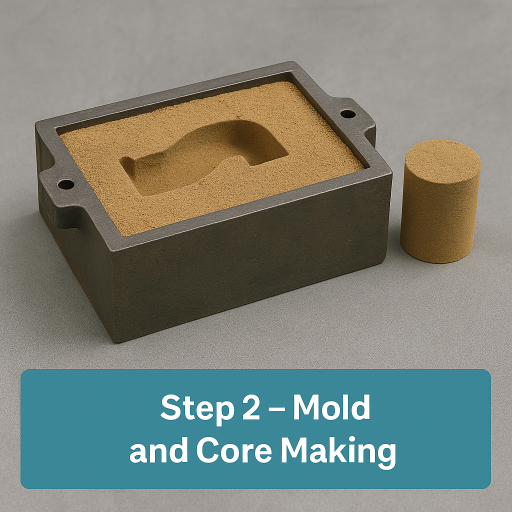
Step 2 : Mold and Core Making :
The mold gives the outer shape of the casting, and the core gives the internal shape (hollow part).
Process:
Molds are made using sand mixed with clay and water.
Core is placed inside the mold to create internal cavities.
Types of Molds:
Green sand mold
Dry sand mold
Shell mold
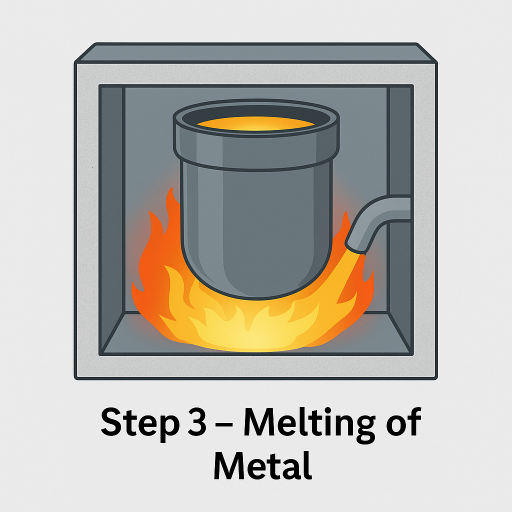
Step 3: Melting of Metal :-
The selected metal (e.g., iron, steel, aluminum, or bronze) is melted in a furnace.
Common Furnaces:
Cupola furnace (for cast iron)
Electric arc furnace
Induction furnace
Simple Line:“Metal is heated until it becomes liquid and ready to pour.”
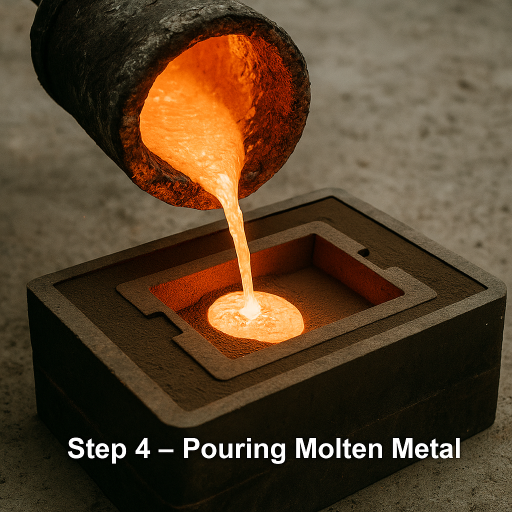
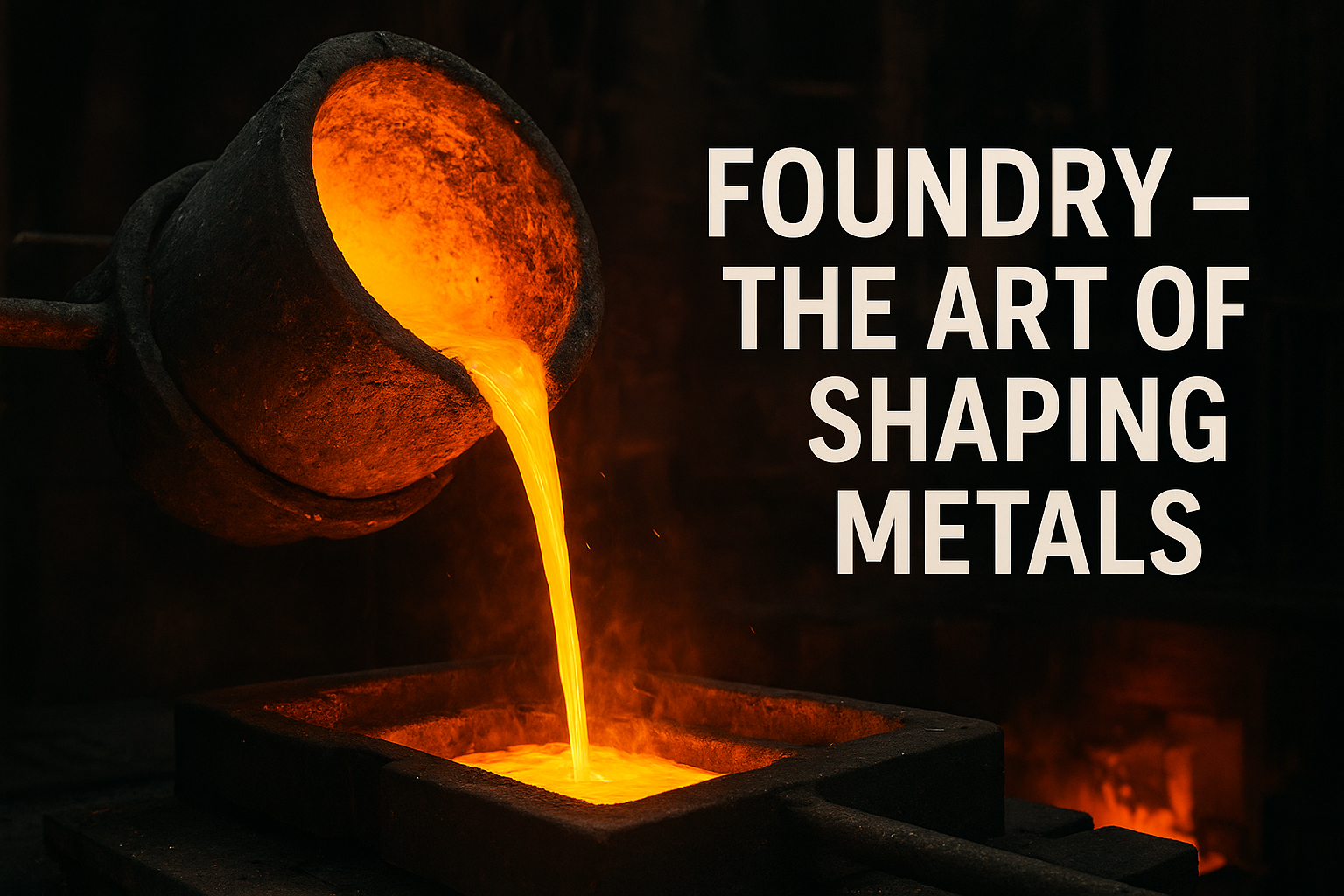
Step 4: Pouring
- The molten metal is poured carefully into the prepared mold using ladles.
Precautions:
Temperature must be maintained properly.
Pouring must be steady to avoid air entrapment.
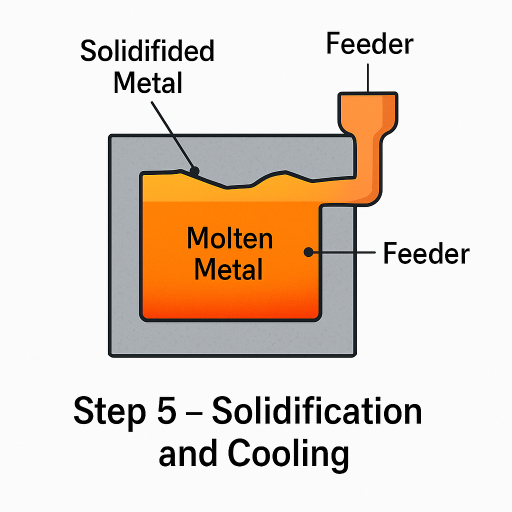
Step 5: Solidification and Cooling
The molten metal inside the mold solidifies as it cools.
During this process, grains form and the casting gains strength and shape.
Simple Line: “As it cools, the liquid metal turns solid, forming the casting.”
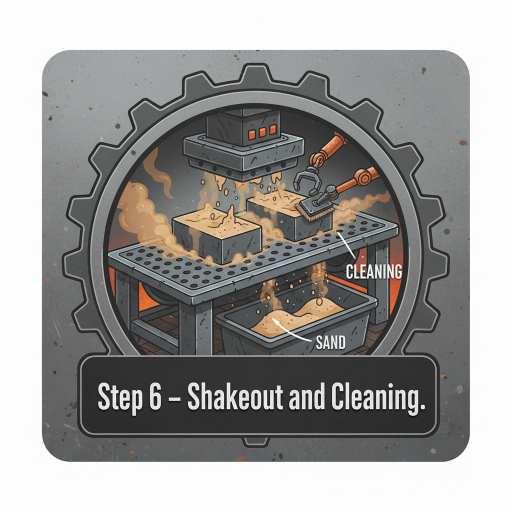
Step 6: Shakeout and Cleaning
After solidification, the mold is broken and the casting is removed.
Extra material (runners, gates) is cut off and cleaned.
Simple Line: “Breaking the mold and cleaning the new casting.”
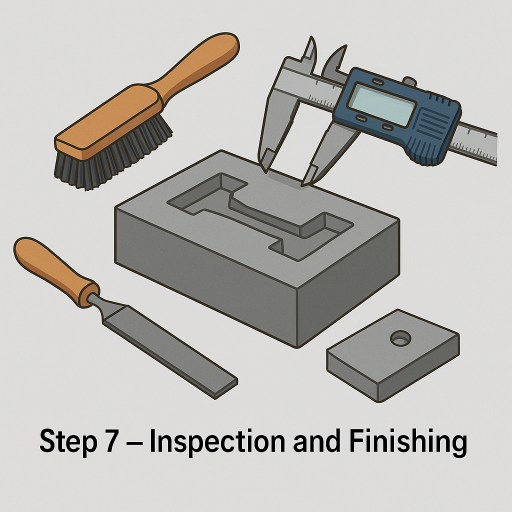
Step 7: Inspection and Finishing
The cast part is checked for defects and dimensional accuracy.
Finishing operations like grinding, machining, or heat treatment may be done.
Common Tests:
Visual inspection
Dimensional check
X-ray or ultrasonic test
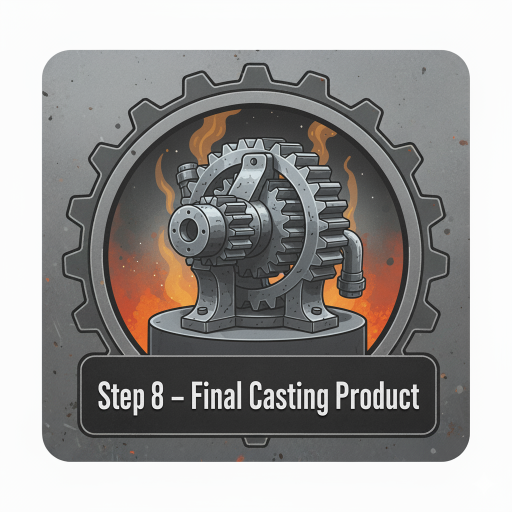
Step 8: Final Casting Product
The finished casting is now ready for use in various industries.
Applications:
Automobile parts (engine blocks, brake drums)
Machinery parts (gear housings, pulleys)
Construction (pipes, fittings, tools)
Advantages of Foundry Process :
 Suitable for complex shapes.
Can cast large or small parts.
Works with almost all metals.
Low waste, economical for mass production
 Limitations
 Poor surface finish without finishing work.
Shrinkage and porosity defects possible.
Skilled labor needed.
Mold used only once (in sand casting)
 Applications of Foundry Technology
Automotive industry
Aerospace components
Machine tool bodies
Pump housings and valves
Metal sculptures and art castings